Garage Door Repair: Repair or Replace? How Hempfield Township Homeowners Decide
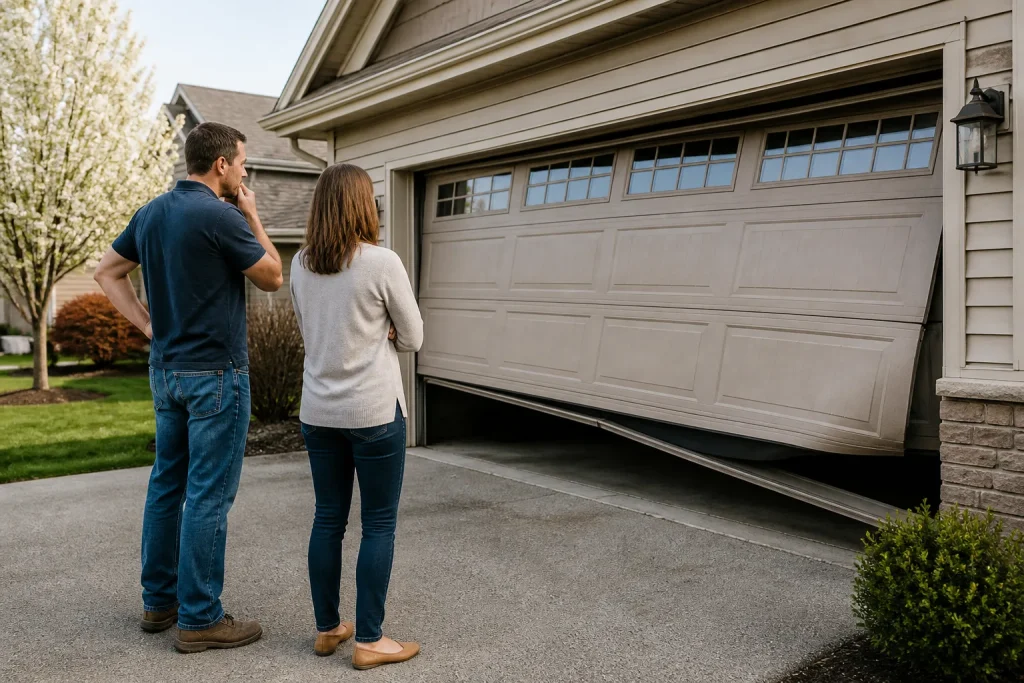
The question isn’t really “how old is the door?” It’s whether the money you’d spend on a repair makes sense against the money you’d spend on a full replacement, and whether the hardware underneath a new panel is strong enough to carry it. A single panel replacement on a door with aged tracks, tired cables, and a spring at the end of its cycle is money spent on the wrong end of the system. Here’s the framework we use to walk Hempfield Township homeowners through the call.
Key Takeaways
- The decision comes down to repair cost as a percentage of replacement cost, not door age alone.
- Hardware condition (tracks, springs, cables, drums) matters as much as the panel itself.
- A repair that costs under half of replacement is usually worth doing, as long as the frame is sound.
- New panel weight can change what your existing opener has to lift, so compatibility needs checking first.
- Springs are the safety-critical component on any door, repair or replace.
What’s the 50% Rule, and how does it apply to garage doors?
The 50% rule is simple: if a repair costs less than half of what a full replacement would run, repair usually wins. If it approaches or passes that line, replacement starts making more sense. For a garage door, this rule needs a mechanical adjustment, because a door has more moving parts than a fridge or a faucet. You’re not weighing a repair against a replacement in the abstract. You’re weighing panel work, spring work, and hardware work against a full door system.
Here’s how we’d frame the numbers:
- Panel-only damage, otherwise sound door: a single section replacement typically lands well under the 50% mark. This is a repair-side call nearly every time.
- Spring and cable failure on a door in decent shape: replacement of the springs and cables is a fraction of what a whole new door costs, and the rest of the door keeps working. Repair wins.
- Multiple damaged sections, or a bottom section with rot or delivered impact damage: panel replacement costs stack up fast, and you’re paying new-door money for a door that isn’t new. This is where the 50% line gets crossed.
- Track damage or a bent frame: if the frame has to be rebuilt, you’re partway to a new installation already.
Where the math gets murky, get a written estimate for both sides of the decision. A number on paper beats a gut feeling.
Should you test the hardware before you commit to a repair?
Yes. This is the step most homeowners skip, and it’s the one that changes the answer. The panel is the visible part. The hardware underneath is what carries the load, and it doesn’t care that the panel is shiny and new. Before you put money into a repair, look at the parts that would still be doing the work after the fix.
Hardware checklist:
- Tracks: run a hand along the inside edge. Dents, kinks, or visible misalignment mean the door can bind and the hardware wears out faster.
- Rollers: listen for grinding as the door moves. Worn rollers are cheap to replace, but they’re a symptom of wear elsewhere.
- Drums and cables: frayed cables and worn drums are a sign the system has had a long service life. Cables carry tension and should be treated as a serious safety part.
- Springs: springs cycle toward failure, and a sagging or noisy spring means the lift system is on borrowed time.
- Hinges and brackets: loose or rusted hardware can usually be replaced, but it flags whether the assembly is worth keeping.
If the tracks, drums, and cables are in good shape, a repair is very likely the better call. If they’re shot, a new panel on top of worn hardware is like one fresh tire on a car with cracked rims: the system is only as strong as its weakest part.
When is panel-only replacement not worth it?
Panel replacement looks like the obvious fix: swap out one section, save money, move on. Sometimes that’s exactly right. But there are cases where a single replacement section ends up being a poor value:
- The remaining sections are compromised. A door with one visibly damaged section often has others with bent ribs, faded and brittle finishes, or hidden fatigue. You’re putting a new part on a tired door.
- Bottom section rot or rust. If the bottom panel has moisture damage or rust-through, the sections above it are often in the same state.
- The replacement panel doesn’t match. Manufacturers change profiles and finishes over time. A mismatched section stands out, and the value you thought you’d gained disappears.
- The door has structural issues from impact or age. A bent track, a twisted panel, or a racked frame usually means the whole door needs attention, not just the visible section.
If any two of these apply, price out a full door alongside the panel quote. If one applies, a panel is usually still the right answer.
Will my existing opener handle a replacement door?
This is where a lot of well-intentioned plans hit a wall. Openers are built around a specific door weight and travel. Change the door, and the opener may need to change too. New panel weight varies by material:
- Steel doors: gauge thickness matters, and a heavier-gauge steel door will put more load on an older motor.
- Wood doors: typically heavier and more affected by moisture swings, which is meaningful in Hempfield Township’s freeze-thaw seasons.
- Composite and aluminum doors: can be lighter, but not always, and the opener’s travel and force settings still need to match the new door.
Before committing to a new door, check what your current opener can handle. A LiftMaster or Craftsman unit that’s been reliable on a light door may struggle with a heavier replacement. A Wayne Dalton or Raynor system has its own force settings and travel limits that need to be set for the new door. If the opener is old, this is also the moment to weigh garage door opener repair against replacement, since you’re already making a change.
When does replacement beat repair?
Some scenarios put the decision past repair. In our experience, replacement is clearly the better value when:
- Multiple panels are damaged. Once you’re replacing two or more sections plus hardware, the cost gap to a new door narrows fast.
- The bottom section has rot or structural damage. That rot usually runs up the door, and a full door solves it properly.
- You’re converting door width or changing the opening. Widening or changing the door means the hardware and opener need to change with it.
- The hardware is at or past the end of its service life. New panels on aged springs, cables, and tracks don’t last the way they should.
On the other side, a targeted repair on a sound door can add years of usable life. Assuming the hardware checks out, a well-executed spring or panel repair typically extends the door’s useful life by several years before the next major decision comes up.
When to call a pro
We’re all for homeowners understanding their own systems, and some checks are worth doing yourself. But springs, cables, and drums are not DIY work. These parts carry high tension and can release suddenly, and the injury risk from a spring under load is real. If the spring is broken, the cable is frayed, or the door is off its track, leave it alone and call a trained technician. The same goes for any electrical work on the opener.
If you’ve decided a repair is the right call, we handle garage door repair and garage door spring repair directly, across LiftMaster, Chamberlain, Genie, Clopay, Amarr, Wayne Dalton, Craftsman, and Raynor equipment. Our technicians have up to 13 years of experience, and we quote and agree the price before any work starts.
The Bottom Line
The repair-or-replace call for a Hempfield Township door comes down to three things: repair cost as a share of full replacement, the condition of the hardware a repair would rely on, and whether your current opener can carry the door you’re considering. Under 50% and sound hardware, repair usually wins. Above 50%, multiple damaged sections, or worn-out tracks and springs, and replacement is the better value. If you’re on the fence, get both numbers on paper and compare them side by side.
If you’re in Hempfield Township and need help, Garage Door Repair Hempfield offers free estimates. Call (833) 482-6572 and we’ll take a look at what you’re working with. One call covers the whole door system, and you’ll know what we recommend and why before anything gets ordered or installed.
Frequently Asked Questions
Repair is typically a fraction of replacement cost; panel and spring repairs usually land well under the 50% threshold of a new door, while multiple-panel damage pushes toward replacement territory. Exact pricing depends on your door type and hardware, so we write a quote before we start. Call (833) 482-6572 for an exact quote; estimates are free.
For repair and repair emergencies, we can often get a technician to you quickly. If your door is stuck open, off its track, or the spring has let go, don’t force it. Call (833) 482-6572 and we’ll set up the soonest available appointment.
The written quote is the price. We assess the door, agree the scope with you, and quote before any work starts, so you aren’t surprised when the invoice arrives. Call (833) 482-6572 with your door details and we’ll get started.
The local professionals we connect you with are licensed and insured as their state requires. We work on the major brands and we treat springs as the safety component they are, so an experienced technician is doing that work. Call (833) 482-6572 to get connected with a vetted local pro.
Written by the team at Garage Door Repair Hempfield.
Need Garage Door Help?
Call Garage Door Repair Hempfield - the local pro we connect you with is licensed and insured, here with fast after-hours help in Hempfield Township.
(833) 482-6572